What Is Giclee Printing? And Why Does It Matter for Coastal Wall Art?
I get this question a fair bit. Someone lands on my site, sees a print they love, and then notices the word "giclee" in the product description and wonders what on earth it means. Is it a fancy word for regular printing? Is it worth paying for? Does it actually make a difference?
Short answer: yes, it genuinely does. And if you're buying coastal wall art to hang in your home or holiday place for the next decade, it's worth understanding why.
So What Actually Is Giclee Printing?
Giclee (pronounced zhee-clay) is a fine art printing method that uses professional-grade inkjet printers loaded with archival pigment inks. The word comes from the French for "to spray," which is pretty much what these printers do. Instead of the basic CMYK four-colour process you'd get at a print shop, giclee printing uses eight, ten, or even eleven separate ink channels to build up colour with incredible precision and depth.
The result is a print that looks far closer to the original photograph or artwork than anything a standard office or commercial printer could produce. The colour range is wider, the tonal gradients are smoother, and the fine detail is sharper.
All my prints are produced using giclee archival inks. Every single one. Whether you're ordering an unframed print rolled in a tube or a fully framed piece ready to hang, the image quality underneath is the same.
Why Archival Inks Matter for Prints That Last
Archival means exactly what it sounds like. These inks are designed not to fade or yellow over time, even when exposed to normal indoor light. A standard inkjet print can start fading within a few years. An archival giclee print, on the right paper, is rated to last well over a century under proper conditions.
That matters a lot when you're buying coastal wall art. Coastal homes and holiday rentals get plenty of light through the windows. A print that fades out in five years isn't worth hanging. Mine won't.
For my classic framed prints, I use 250gsm premium matte art paper printed with giclee archival inks. For the shadow box frames, it steps up to 270gsm fine art paper. And for the premium shadow box, I use 308gsm Hahnemuhle Rag Mount Smooth, a museum-quality fine art paper, printed with eleven-colour giclee archival inks. That's the same standard you'd find in a gallery.
If you're curious about which framing option suits your space, my guide to framed beach prints in Australia breaks it all down simply.
Why It Matters Specifically for Coastal Photography
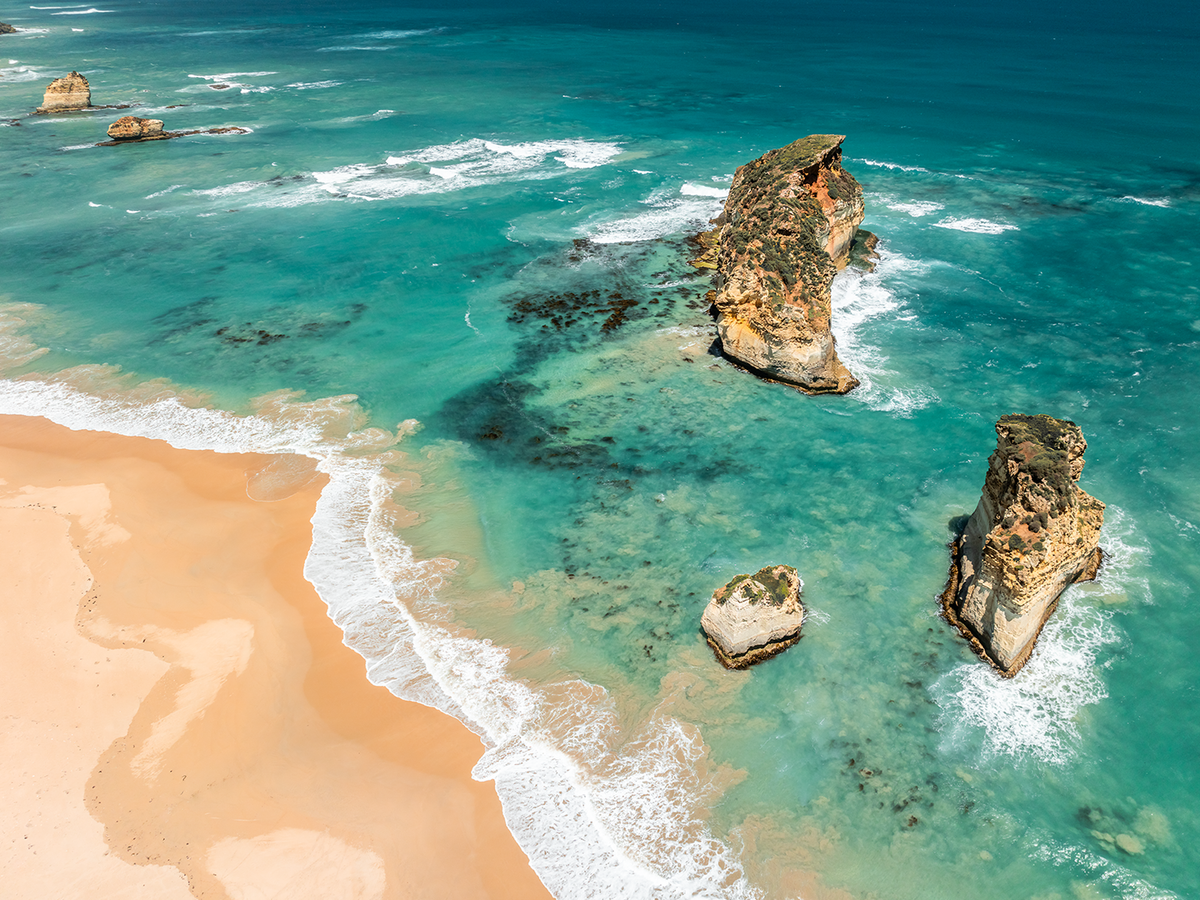
Coastal images push colour reproduction hard. The blues in ocean water aren't a single blue. There are greens, teals, deep navy shadows, and bright aqua highlights all in the same wave. A standard print flattens all of that. A giclee print holds it.
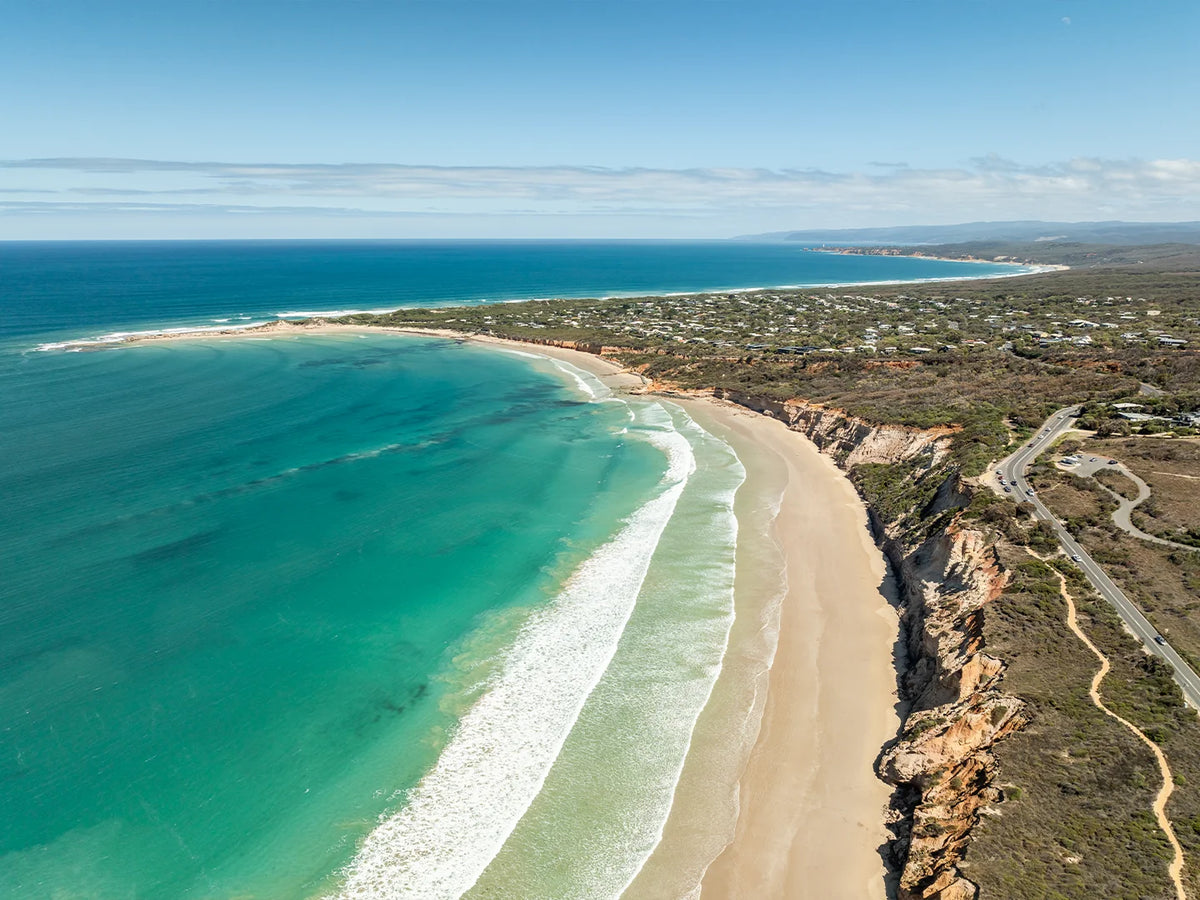
My Point Addis Art Print I is a good example. I shot this from above with my drone on a clear morning, and the colour in that water is the whole point of the image. The turquoise reef, the contrast with the limestone cliffs, the way the light hits the break. None of that survives a low-quality print. With giclee archival inks on proper fine art paper, it does.
Same goes for something like the Rainbow Bay Art Print I from the Gold Coast. The colour in that water at Rainbow Bay is a big part of why people buy it. Giclee printing is what makes those colours pop off the wall rather than look flat and washed out.
This is also why customers keep telling me their prints get compliments from everyone who walks into the room. The colours hold. The detail holds. The print looks as good in five years as it did on day one.
What About the Paper?
The ink is only half the equation. Giclee printing on cheap paper is like cooking a great steak in a bad pan. You lose the quality before it even hits the wall.
All my print papers are matched to the ink to maximise colour accuracy and longevity. The canvas I use for my floating frame canvas prints is 400gsm Hahnemuhle Daguerre, which is museum quality, with no glass over the top. That's ideal for rooms with a lot of natural light because there's zero reflection and zero glare to deal with.
You can compare all the framing options side by side on my product guide, which shows exactly what paper and glass is used in each product.
Take the Coast Home, Properly
If you've found a beach that means something to you, or a location you keep going back to, it's worth doing it justice on the wall. A giclee fine art print of that place, on proper archival materials, is going to look great for years. A cheap print from a generic site won't.
My prints start from $89 and ship free anywhere in Australia. They're printed to order right here in Victoria, framed in FSC certified timber, and ready to hang when they arrive. No assembly required.
Browse the full range and find your beach at Point Addis Art Print I or head to the product guide to work out which format is right for your space.
Frequently Asked Questions
What is giclee printing and why is it better than regular printing?
Giclee printing uses professional-grade inkjet printers with archival pigment inks across multiple colour channels, often eight to eleven, to produce fine art prints with much greater colour accuracy and depth than standard commercial printing. The inks are designed not to fade or yellow over time, which makes a real difference for prints you plan to hang for years. Standard inkjet prints can start fading within a few years. A properly produced giclee print on archival paper is rated to last well beyond a century under normal indoor conditions.
Are giclee prints worth the extra cost for coastal wall art?
For coastal wall art specifically, yes. Coastal images rely heavily on accurate colour reproduction across a wide range of blues, greens and teals, and giclee printing is the only method that captures that range faithfully. A cheaper print will look flat and lose colour over time, especially in a bright coastal home. If you're investing in a print for your home or holiday property, giclee archival printing is the standard that makes it worth the wall space.
What paper is used for giclee coastal art prints at Local Breaks?
It depends on the product. Classic framed prints use 250gsm premium matte art paper with giclee archival inks. Shadow box frames use 270gsm fine art paper. The premium shadow box uses 308gsm Hahnemuhle Rag Mount Smooth, a museum-quality fine art paper, printed with eleven-colour giclee archival inks and protected by Tru Vue Museum Glass with 99% UV protection. Floating frame canvas prints use 400gsm Hahnemuhle Daguerre stretched canvas with no glass, making them ideal for bright rooms.
Do giclee prints fade in rooms with a lot of natural light?
Archival giclee inks are far more resistant to fading than standard inkjet inks and are designed to last under normal indoor conditions for a very long time. For rooms with significant natural light, the premium shadow box with Tru Vue Museum Glass adds an extra layer of protection with 99% UV blocking. The floating frame canvas is also a strong choice for bright rooms