I've been shooting coastal landscapes for years now, and I've learned something that most people don't think about until after they've bought a print: the frame matters just as much as the photo itself.
You can have the most beautiful shot of Point Addis at golden hour, but stick it in a cheap frame and it'll look like something you grabbed at a closing down sale. Get the framing right though, and that same image becomes something you're genuinely proud to hang on your wall.
Here's what I've learned about framing beach prints, and why it actually makes a difference to how your space feels.
The Frame Changes How You See the Image
A good frame does two things. First, it protects your print from UV damage, moisture and dust. Second, it creates a border between your wall and the artwork that helps your eye focus on what matters.
I always use FSC certified timber for my frames. It's not just about being sustainable (although that matters). Timber frames have a warmth that metal or plastic just can't match. When you're hanging beach photography, you want that natural material speaking to the ocean and sand in the image.
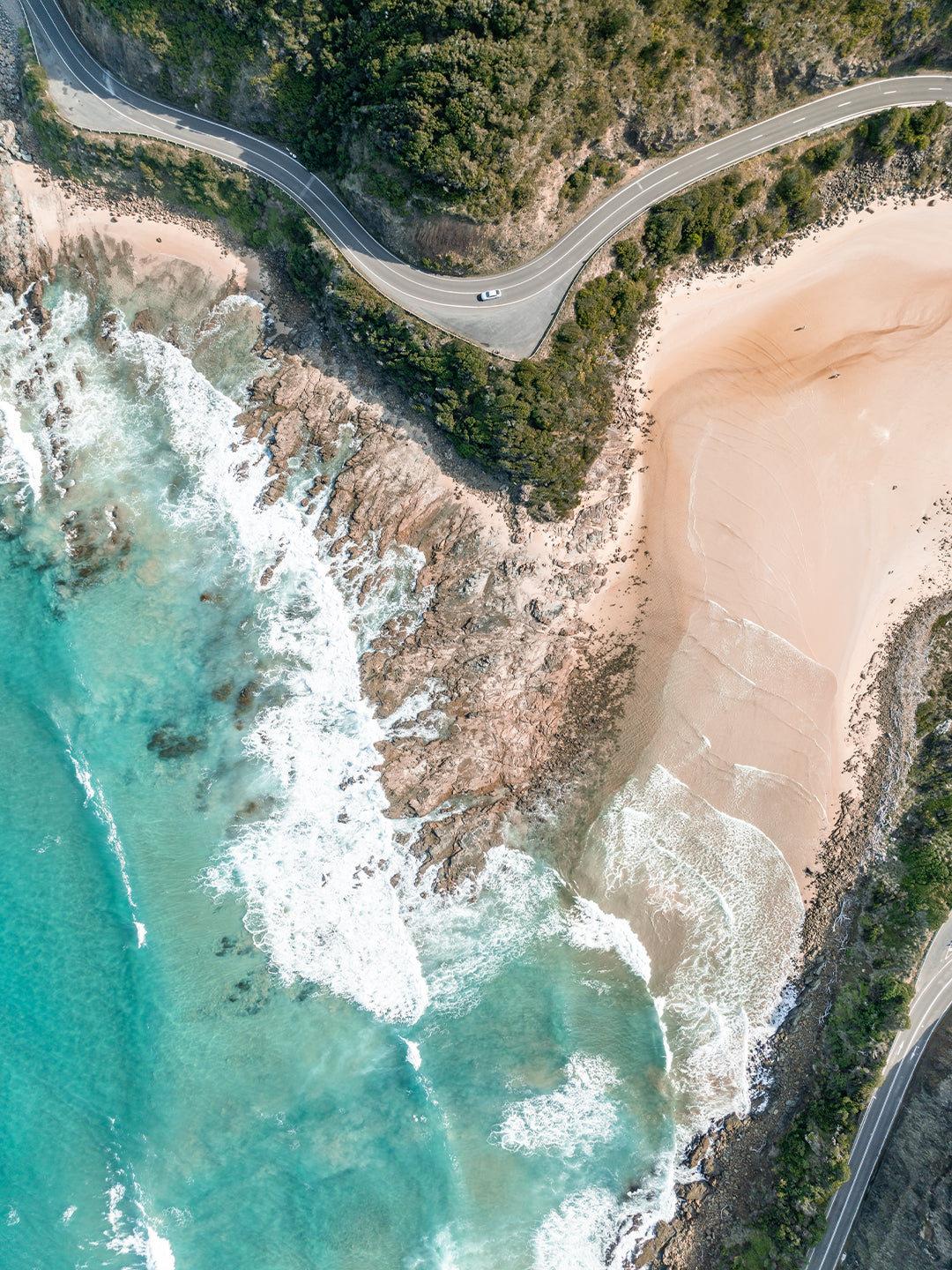
The classic framed option works beautifully for coastal prints because it keeps things simple. No distractions, just clean lines that let the photo do the talking. My Point Addis Art Print I looks incredible in a classic frame because the composition is already strong. You don't need anything fancy.
Shadow Box Frames Add Depth (Literally)
Here's where it gets interesting. A shadow box frame sits your print about 15mm off the wall. That small gap creates actual depth and makes the image feel more dimensional.
I recommend shadow box framing for prints with big skies or expansive ocean views. Something like the Barwon Heads Art Print I with those peachy sunset colours really pops in a shadow box. The gap makes the colours feel richer somehow.
The premium option uses Tru Vue glass, which is worth it if you're hanging your print in a bright room or anywhere that gets direct sunlight. Regular glass can create glare that washes out the blues and greens in ocean photography. Tru Vue cuts that glare way down.
Size and Frame Proportion
The bigger your print, the more the frame choice matters. At smaller sizes like XS (21x29.7cm) or S (29.7x42cm), you've got more flexibility. But once you're up at L (59.4x84.1cm) or XL (84.1x118.9cm), the frame becomes part of the room's architecture.
I've seen people go too thin with their frame on a large print and it looks flimsy. Not enough visual weight to balance the image. On the flip side, a super chunky frame on a small print can overwhelm the photo entirely.
My general rule: match the frame presence to the drama in the image. Calm, minimal compositions can handle slimmer frames. Big dramatic coastlines with cliffs and crashing waves need frames with more substance.
Canvas vs Framed Paper Prints
Canvas prints have their place, but for beach photography I prefer framed paper prints nine times out of ten. Paper holds detail better, especially in the highlights and shadows. When you're printing ocean scenes with bright white water and deep blue depths, that tonal range matters.
Canvas can soften details and it doesn't need glass, which some people prefer. But glass protects your print and keeps the colours true for longer. Beach prints often have subtle colour gradients in the sky and water. Glass keeps those gradients looking the way they should.
Take the Coast Home
Every print I shoot and frame is done right here in Victoria. I handle the photography personally, and every frame is built with the same FSC certified timber and proper archival materials. No shortcuts.
When you order a framed print from Local Breaks, it arrives ready to hang with free shipping anywhere in Australia. You don't need to find a framer or stress about whether the colours will match. It's sorted.
Whether you're after a small piece for your hallway or an EPIC 100x150cm statement print for above the couch, the frame is part of the artwork. It's not an afterthought.
FAQ
What's the difference between a classic frame and a shadow box frame?
A classic frame sits flush against the wall with your print directly behind the glass. A shadow box frame creates a 15mm gap between the print and the glass, which adds depth and makes the image feel more three dimensional. Shadow box works especially well for prints with big skies or ocean horizons. Both options use the same FSC certified timber and come ready to hang.
Do I need Tru Vue glass for my beach print?
Tru Vue glass is worth considering if your print will hang in a bright room or get any direct sunlight. It significantly reduces glare and provides better UV protection than standard glass. For prints in hallways or rooms with softer lighting, standard glass works perfectly fine. The colours in my prints are vivid either way, but Tru Vue gives you that extra clarity in challenging light conditions.
What frame size should I choose for my wall?
It depends on your wall space and what else is around it. As a starting point, measure your wall width and aim for your print to take up about one half to two thirds of that space. For a large empty wall, go bigger than you think. For gallery walls with multiple prints, mix sizes but keep at least one larger anchor piece. Check out my size guide for specific measurements and room examples.
Are your frames real timber?
Yes, every frame is made from FSC certified timber. No plastic, no composite, no fake timber look. Real wood that's sustainably sourced. It costs more to do it this way, but timber frames age better and they suit coastal photography perfectly. You're getting a quality product that'll last.
The right frame turns a print into a piece of art you'll love looking at every single day.